Formats and Editions
1. Song-Koï: I. La source
2. Song-Koï: II. La haute plaine
3. Song-Koï: III. Les chemins célestes
4. Song-Koï: IV. La ville de Son-Phong
5. Song-Koï: V. Le retour des pavillons noirs
6. Song-Koï: VI. La rivière Noire
7. Song-Koï: VII. Le fleuve Rouge reçoit la rivière Noire
8. Song-Koï: VIII. L'arrivée à la mer et la mort
9. Symphony No. 1: I. Andante - Vivace
10. Symphony No. 1: II. Adagio - Vivace
11. Symphony No. 1: III. Finale. Adagio - Allegro giocoso e leggiero
12. Symphony No. 2 "Voïna": I. Adagio - Allegro moderato
13. Symphony No. 2 "Voïna": II. Marche funèbre. Lento
14. Symphony No. 2 "Voïna": III. Finale. Allegretto
15. Les Tziganes
More Info:
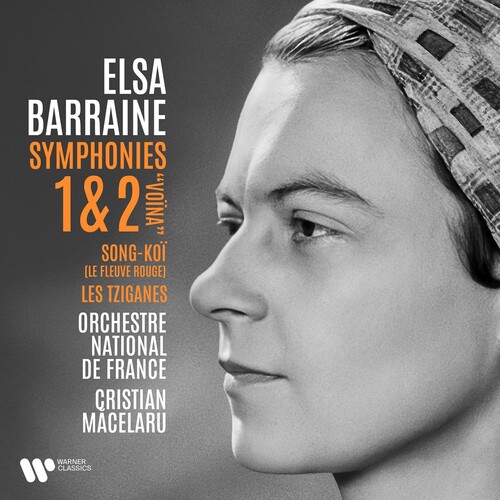
Elsa Barraine, a notable and politically intrepid figure in her lifetime (1910-1999), is a composer whose distinctive voice is being heard again. Under it's music director Cristian Macelaru, the Orchestre national de France performs four works by Barraine: the Symphony No 1, completed in Italy in 1931; the compact, but powerful Symphony No 2, composed in 1938 and ominously subtitled 'Voïna', the French transliteration of the Russian word for 'war'; Song-Koï (Le Fleuve rouge) - an eight-movement evocation of the Red River which flows through Vietnam, composed in 1945, the year Vietnam declared it's independence from France, and, dating from 1959, Les Tziganes, which, as it's name implies, takes inspiration from gypsy culture. Rooted in tonality, Barraine's music is confidently and soberly crafted, it's orchestral palette both clearly defined and subtly shaded as it reflects it's times and the composer's philosophical and spiritual concerns.