Formats and Editions
1. Hierarchical Entrance Rite for a Byzantine Divine Liturgy: Intro
2. Hierarchical Entrance Rite for a Byzantine Divine Liturgy: Hymn
3. Hierarchical Entrance Rite for a Byzantine Divine Liturgy: Imper
4. Hierarchical Entrance Rite for a Byzantine Divine Liturgy: Glory
5. Hierarchical Entrance Rite for a Byzantine Divine Liturgy: Konta
6. Hierarchical Entrance Rite for a Byzantine Divine Liturgy: Hiera
7. Hierarchical Entrance Rite for a Byzantine Divine Liturgy: Dynam
8. Vasilissa ergo gaude, isorhythmic motet for 4 voices
9. Enite ton Kychirion, hymn
10. Apostolo glorioso, isorhythmic motet for 5 voices
11. Kyrie. Cunctipotens genitor (MS Athens 2401)
12. Ecclesie militantis, isorhythmic motet for 5 voices
13. Kanon in Honor of St. Thomas Aquinas: Ode 1 (Melody by John of D
14. Communion Hymn for Mid-Pentecost
15. Canon for the Council of Florence (Ode 5)
16. Lament for the Fall of Constantinople (MS Iviron 1120)
17. O tres piteulx, cantilena motet for 4 voices ("Lamentatio sancta
More Info:
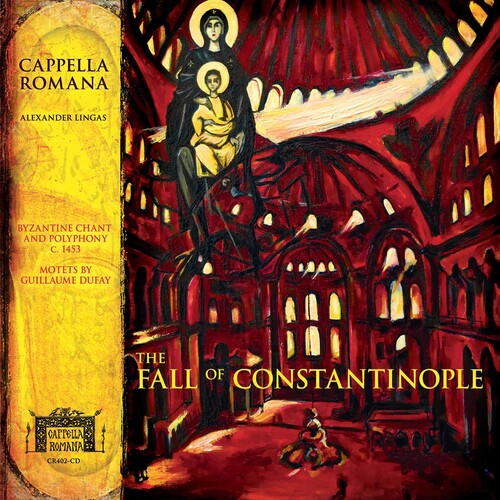
Cappella Romana explores the musical legacy of the ancient civilization of Byzantium- caught between Latin West and Islamic East- with majestic ceremonies for the cathedral of Hagia Sophia, triumphant assertions of superiority by Westerners, and fervent prayers for the healing of religious divisions. Fabled Byzantium ended with the fall of Constantinople to the Ottoman Turks on 29 May 1453, inspiring the two poignant laments sung here that give Greek and Latin perspectives on the end of a 1,000-year-old empire.